
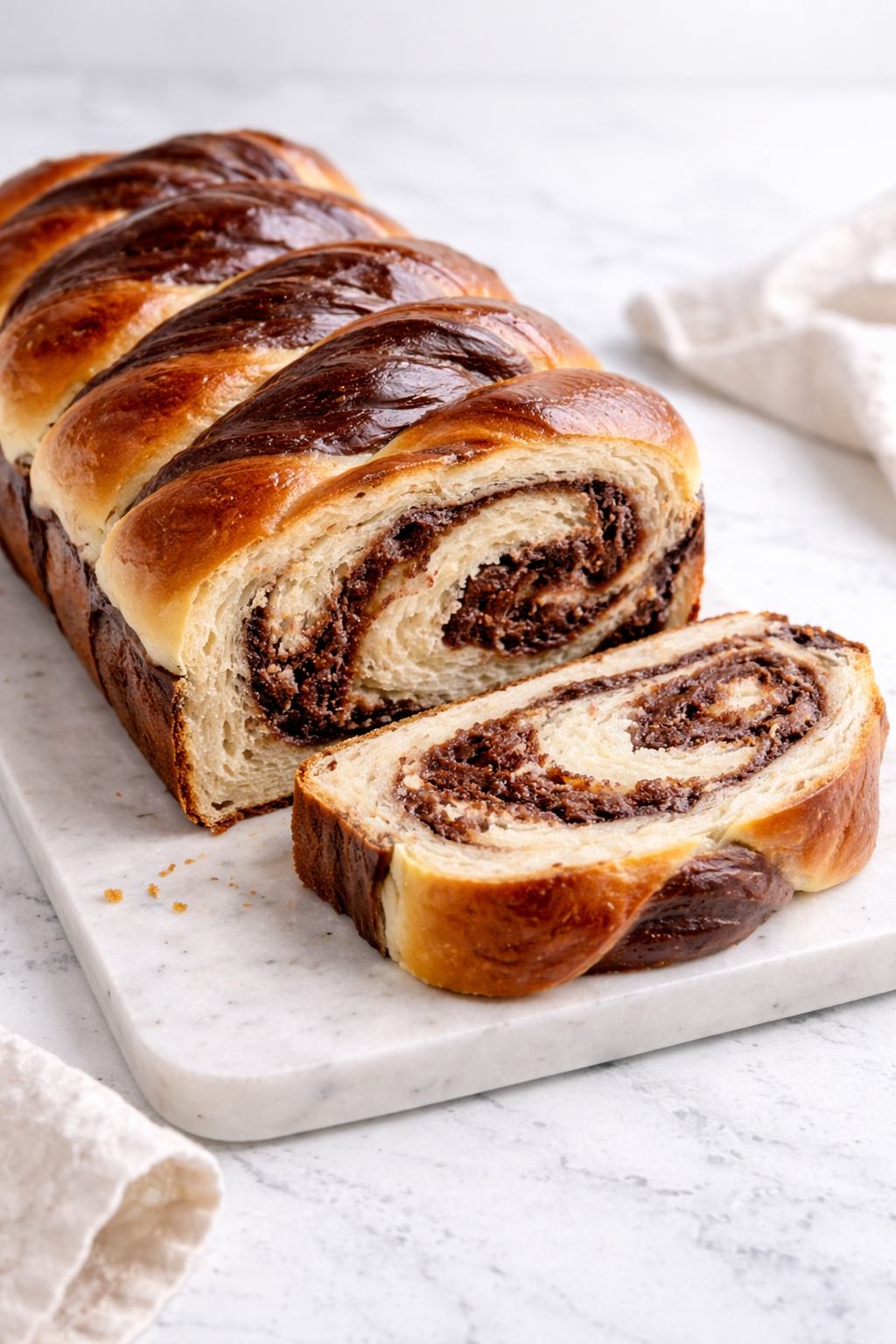
Spectacular Nutella Swirl Easter Bread: A Delightful Twist on a Traditional Favorite
Easter traditions are often anchored by the scent of baking bread. Across Eastern Europe, the “Cozonac” stands as the undisputed king of the holiday table—a citrus-scented, enriched loaf that symbolizes celebration and abundance. However, even the most cherished traditions can benefit from a luxurious update. Our Spectacular Nutella Swirl Easter Bread takes the soft, pillowy soul of the Romanian classic and infuses it with a deep, sophisticated cocoa dough and a molten heart of hazelnut cocoa spread.
The result is a mesmerizing bicolored loaf that looks like it belongs in the window of a high-end European patisserie. By utilizing a “dough-on-dough” layering technique, we create a high-contrast swirl that reveals itself only when the bread is sliced, making every piece a work of art. Whether you are serving this for a festive brunch or gifting it to a loved one, this bread represents the perfect marriage of old-world technique and modern indulgence.
The Science of the “Cozonac” Crumb
What differentiates an Easter bread from a standard sandwich loaf is the enrichment. By incorporating sugar, eggs, and butter, we are creating what bakers call an “enriched dough.” This addition of fat and sugar interferes with the gluten formation just enough to ensure the final product is tender and “shredable” rather than chewy like a baguette.
One of the most important components in this specific recipe is the use of 521g of high-protein flour (often labeled as Bread Flour in North America). Because we are adding heavy ingredients like Nutella and cocoa powder, the dough needs extra structural integrity. High-protein flour contains more gluten-forming proteins, which allow the dough to expand and rise beautifully despite the weight of the chocolate. This ensures that even with those thick, luscious swirls, the bread remains light, airy, and fluffy.
Detailed Ingredient Breakdown
To achieve a professional-grade holiday loaf, every ingredient must be prepared to the right specification.
The Leavening and Liquids
- 250 ml Warm Milk: This is the hydration for your loaf. It must be “baby bottle warm” (roughly 40°C). If the milk is too hot, it will neutralize the yeast; too cold, and the rise will take hours.
- 120 g Sugar: This provides sweetness and acts as the primary fuel for the yeast.
- 5 g Dry Yeast: While small in quantity, this is the engine of the recipe. Ensure your yeast is fresh by checking the expiration date.
The Structural Components
- 521 g High-Protein Flour: This is the backbone. We use 520g for the main dough and keep a tablespoon aside to balance the texture of the plain dough once the cocoa is added to the other half.
- 2 Eggs: One egg goes into the dough for richness and color, while the second is used for the “egg wash,” which provides that signature mahogany shine on the crust.
- 1 tsp Salt: Never skip salt in sweet bread! It tightens the gluten and enhances the chocolate notes.
The Flavor and Contrast
- 2 tbsp Soft Butter: Added gradually during kneading to create a silky, brioche-like texture.
- 3 tbsp Unsweetened Cocoa Powder: This transforms half of your dough into a rich, dark chocolate canvas.
- 3 tbsp Nutella: The “secret sauce” that provides a gooey, hazelnut-scented interior.
- 1 tsp Vanilla Essence: To provide that classic bakery aroma.
Step-by-Step: Mastering the Bicolored Swirl
1. The Fermentation Phase (The Bloom)
Start by whisking your warm milk, sugar, and dry yeast. Let it rest for 10 minutes. You are looking for a frothy, bubbly surface—this “bloom” confirms your yeast is alive. Once active, whisk in your first egg and the vanilla essence.
2. Kneading and Enrichment
Slowly incorporate the 520g of flour and salt. Once a shaggy dough forms, begin kneading. Now, add your soft butter one tablespoon at a time. Kneading fat into a dough takes patience; at first, it will feel slippery, but as you continue to work it, the dough will absorb the butter and become incredibly smooth and elastic.
3. Creating the Two-Tone Contrast
Divide the dough into two equal portions.
- To the first portion, knead in the 3 tbsp of cocoa powder. This may take a few minutes of folding to ensure the color is perfectly even.
- To the second portion, knead in that extra tablespoon of flour. This ensures both doughs have the same “feel” and density, which is crucial for an even rise.
4. The Bulk Rise
Place both doughs in separate greased bowls and cover them. Let them rise in a warm spot for 2 hours. Enriched doughs rise slower than lean doughs because the sugar and fat slow down the yeast. Be patient—you want them to be truly doubled in size.
5. The Layering and Rolling
Roll out the plain dough into a large rectangle. Roll out the cocoa dough to the same size and lay it directly on top of the plain one. Give them a quick pass with the rolling pin to “lock” them together. Spread your Nutella across the cocoa layer, leaving a small border. Roll the dough up tightly like a sleeping bag, seal the seam, and place it into a greased loaf pan for a final 30-minute proof.
6. The Bake
Preheat your oven to 180°C (356°F). Brush the top with your beaten egg. This creates a barrier that traps moisture and results in a glossy, professional finish. Bake for 35-40 minutes. If the bread sounds “hollow” when tapped on the bottom, it is done.
Frequently Asked Questions (Q&A)
Can I use All-Purpose flour instead of High-Protein flour? You can, but the bread may be slightly less tall and a bit more crumbly. If using all-purpose, try to handle the dough as little as possible once it has risen to avoid deflating the weaker gluten structure.
Why is my Nutella leaking out? This usually happens if the dough isn’t rolled tightly enough or if the seam isn’t pinched shut. Make sure to leave that 1-inch border without Nutella at the very end of your rectangle so the dough can stick to itself when you finish rolling.
How do I store this Easter Bread? Because of the high fat and sugar content, this bread stays fresh longer than most. Wrap it tightly in plastic wrap or store it in an airtight container at room temperature for up to 4 days. It also makes incredible French toast if it happens to go slightly stale!
Is it okay to use a stand mixer? Absolutely. Using a stand mixer with a dough hook is actually preferred for enriched doughs, as it handles the “slips” of the butter integration more efficiently than hand-kneading.
Tips for a Spectacular Presentation
To make this the centerpiece of your holiday:
- The Glossy Finish: For an extra-shiny crust, mix a teaspoon of honey or maple syrup into your egg wash before brushing.
- The Dusting: Once completely cool, a light snow-dusting of powdered sugar highlights the texture of the crust.
- Serving: Always slice this bread with a sharp serrated knife. This prevents you from squishing those beautiful, delicate air pockets and allows the Nutella swirl to stay perfectly defined.
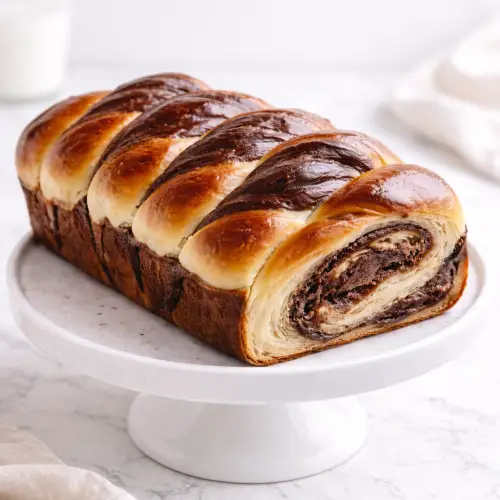
Spectacular Nutella Swirl Easter Bread
Ingredients
The Dough Base:
- 250 ml Whole milk warmed (40°C)
- 120 g Granulated sugar
- 5 g Active dry yeast
- 1 Large egg for the dough
- 1 tsp Vanilla essence
- 520 g High-protein bread flour
- 1 tsp Salt
- 2 tbsp Unsalted butter softened
The Contrast & Filling:
- 3 tbsp Unsweetened cocoa powder for the dark dough
- 1 tbsp High-protein flour for the light dough
- 3 tbsp Nutella hazelnut cocoa spread
- 1 Large egg for brushing/egg wash
Instructions
- Activate: Combine warm milk, sugar, and yeast. Let sit for 10 minutes until frothy.
- Mix: Whisk in 1 egg and vanilla. Gradually add 520g of flour and salt until a dough forms.
- Enrich: Knead the dough, adding softened butter one tablespoon at a time, until smooth and elastic (about 10 mins).
- Divide & Color: Split dough in half. Knead cocoa powder into one half; knead the extra 1 tbsp of flour into the other half.
- First Rise: Cover both doughs and let rise in a warm spot for 2 hours until doubled.
- Layer: Roll both doughs into rectangles. Place cocoa dough on top of plain dough.
- Fill & Roll: Spread Nutella over the cocoa layer. Roll tightly into a log and seal the edges.
- Second Proof: Place in a greased loaf pan and let rise for 30 minutes.
- Bake: Preheat oven to 180°C (356°F). Brush with beaten egg. Bake for 35–40 minutes until golden brown.
- Cool: Let cool in the pan for 5 minutes, then move to a wire rack to cool completely.
Notes
- Flour Power: Bread flour is essential for the “pull-apart” texture of this specific loaf.
- Temperature: Ensure the Nutella is at room temperature so it spreads easily without tearing the delicate dough.
- Garnish: For a festive look, sprinkle with pearl sugar or sliced almonds before baking.