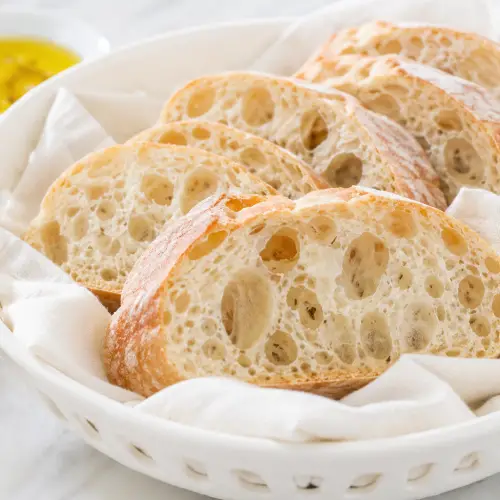
Bakery-Style No-Knead Ciabatta Bread
This bakery-style no-knead ciabatta bread is made with a slow overnight rise, simple ingredients, and no special equipment. The dough is wet and rustic, which helps create a crisp golden crust, chewy texture, and airy open crumb. It makes two beautiful loaves that are perfect for sandwiches, toast, garlic bread, or serving warm with butter.
Ingredients
- 3 ½ cups bread flour about 496 g
- ½ cup whole wheat flour about 71 g
- 1 ½ teaspoons salt
- ¼ teaspoon instant yeast
- 2 cups lukewarm water about 450 ml
- 1 tablespoon olive oil
Instructions
- In a large mixing bowl, combine the bread flour, whole wheat flour, salt, and instant yeast.
- In a separate jug or bowl, stir together the lukewarm water and olive oil.
- Pour the wet mixture into the dry ingredients and mix until a very wet, sticky dough forms. Scrape down the sides of the bowl.
- Cover the bowl tightly with plastic wrap or a reusable cover, then place a kitchen towel over the top. Let the dough ferment at room temperature for about 18 hours.
- The next day, prepare two baking sheets. Line one baking sheet with a clean kitchen towel and dust it very generously with flour. Line the second baking sheet with parchment paper.
- Uncover the dough and gently knock it back. Shape it loosely into a ball.
- Divide the dough into two equal pieces. Place the pieces side by side on the floured towel.
- Cover the dough with the towel and let the loaves proof for 2 hours.
- Preheat the oven to 425°F / 210°C.
- Once the dough has risen and bubbles have formed, carefully turn over each loaf. Gently stretch each piece into a long rustic loaf, about 16 inches.
- Transfer the shaped loaves onto the parchment-lined baking sheet.
- Bake for 35–40 minutes, or until the loaves are golden brown and crisp on the outside.
- Let the bread cool completely before slicing.
Notes
Bread flour gives ciabatta its best chewy texture. All-purpose flour can be used if needed, but the bread may be softer and slightly less chewy.
Ciabatta dough is meant to be very wet and sticky. Avoid adding too much extra flour to the dough itself, or the bread may become dense.
Dust the proofing towel generously with flour so the dough does not stick after rising.
For extra flavor, the dough can be refrigerated for up to 2 days before shaping and baking.
Store leftover bread at room temperature for up to 2 days, or freeze for up to 3 months.
For easy freezing, slice the bread first so you can toast individual pieces as needed.